
You have just put petrol in your diesel car and your stomach has dropped. Stop. Do not start the engine, and if it is already running, switch it off now.
We drain wrong fuel at the roadside every week across Greater Manchester, and the single biggest factor in how this ends is what you do in the next two minutes. Caught at the pump with the engine off, this is usually a straightforward job and you drive away the same hour. This page tells you exactly what to do, what the petrol is doing inside your fuel system, and what happens next.
Put Petrol in a Diesel Car? Do These Four Things First
Work through these in order. None of them costs you anything.
- Leave the key out of the ignition. On most modern cars, even turning the ignition to the first position wakes the fuel pump and starts moving contaminated fuel forward.
- Put the car in neutral and tell the forecourt staff. They deal with misfuels constantly and will help you push the car to a safe spot.
- Note roughly how much petrol went in and how much diesel was already in the tank. We will ask you this on the phone because the mix ratio changes what the job involves.
- Call a mobile fuel drain service rather than booking a garage. The car should not be driven, and a tow plus a garage slot turns a one hour fix into a two day one.
If you only realised something was wrong after driving off, pull over somewhere safe, switch off, and stay off the key. The same advice applies. You have just made the job bigger, not hopeless.
Why Petrol Wrecks a Diesel Fuel System
Diesel is oily, and your fuel system depends on that. The high-pressure pump in a modern common-rail diesel is lubricated by the fuel itself, with metal parts running at extremely fine tolerances under pressures of hundreds of bar.
Petrol does the opposite of lubricating. It behaves as a solvent, thinning the diesel and stripping the protective film off those metal surfaces. Run the pump on a petrol mix and you get metal-to-metal contact, which sheds fine metal particles into the fuel. Those particles then travel to the injectors, which is why a badly misfuelled and driven diesel can end up needing a pump, injectors, and lines rather than a simple drain.
This is why starting the engine matters so much. With the engine off, the contaminated fuel sits in the tank where we can remove it. Start the engine and the mix gets pulled through the filter, the pump, and the injectors, spreading the problem through every expensive component in the chain. The Auto Express guide to misfuelling makes the same point, and it matches what we see on real jobs.
What We Actually Find on Petrol in Diesel Call-Outs
On most of the petrol-in-diesel jobs we attend, the driver spotted the mistake at the pump, usually because the nozzle slid into the filler neck too easily, and never turned the key. Those cars get a full drain and flush, fresh diesel, and they start first time. The driver is gone within the hour.
The harder jobs are the drivers who noticed nothing until the car started hesitating a mile or two down the road. Petrol ignites differently to diesel, so the engine runs rough, smokes, and eventually cuts out as the mix reaches the injectors. Those vehicles still get recovered at the roadside in most cases, but we flush the system more thoroughly and often advise a fuel filter change afterwards, because the filter has had contaminated fuel dragged through it.
We tell every caller the same honest thing. We cannot guarantee from the phone that zero damage has occurred, because that depends on the mix ratio, whether the engine ran, and how far you drove. What we can say is that in fifteen plus years of doing this, engines that were never started after the mistake almost always come through with nothing more than a drain.
” First class service. On site within an hour and all sorted 20 minutes after their arrival. Hoping not to need them again but would highly recommend for anyone else making the same stupid mistake I did.” -Jason Burke
How a Mobile Fuel Drain Works and What It Costs You in Time
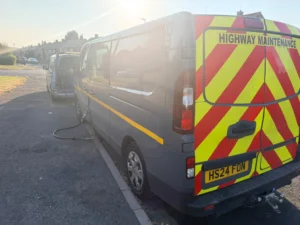
One phone call is the whole booking process. Our line is answered 24 hours a day, and a technician typically reaches you within 30 to 45 minutes anywhere in our Greater Manchester coverage area.
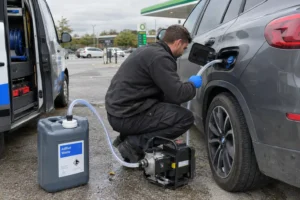
The job itself is quicker than most drivers expect. We drain the contaminated mix from the tank, flush the fuel lines, dispose of the waste fuel legally, and add enough clean diesel to get you to a filling station. A typical drain takes 20 to 40 minutes at the roadside, on your driveway, or on the forecourt itself. You do not need a tow, a garage booking, or a courtesy car.
The same process handles the reverse mistake, so if you have put diesel in a petrol car, the advice and the fix are near enough identical. Full details of the petrol-in-diesel service, including how we handle vehicles that have been driven, are on our petrol in diesel fuel drain .
“I had a real ‘oops’ moment when I accidentally put petrol in my diesel car. Thankfully, I called Fuel Drain in Greater Manchester, and they were just wonderful. The technician, Mr Raees, was skilled and supportive, making me feel at ease during the stressful situation. I am truly grateful for their quick and caring service!” – Faizan
A Quick Word on AdBlue in the Fuel Tank
A different mistake, but we get the panicked call often enough to cover it. AdBlue belongs in its own separate filler, never in the diesel tank. It is a urea and water solution, not a fuel, and inside a fuel system it crystallises as the water evaporates, leaving abrasive deposits that block lines and injectors while the urea corrodes metal components.
Do not start the engine, even for a second. AdBlue contamination needs draining faster than a petrol misfuel because the corrosion begins while the car sits. We handle this as a dedicated AdBlue in fuel tank recovery job with a full system flush.
FAQ: Petrol in a Diesel Car
No. Every mile driven pulls the petrol mix deeper into the pump and injectors and raises the repair bill. If the car is running, pull over safely and switch off. If it has not been started, leave it exactly where it is. A drained tank is a cheap fix. A scored high-pressure pump is not.
You may read that under 5 percent petrol can be diluted with diesel and driven off. We do not recommend relying on that. Even small amounts of petrol lower the flash point and thin the lubrication, and the 5 percent figure assumes you know your tank volumes precisely. If you are unsure of the mix, a drain is the safe call, and it is what we would do with our own vans.
The engine will usually have run rough, smoked, or cut out. Switch off, do not restart it, and call us with the rough mileage driven. Most driven misfuels are still recovered at the roadside with a thorough drain and flush, sometimes with a filter change. Whether any lasting damage occurred depends on the mix and the distance, and we will give you an honest assessment on site.
Some UK policies cover misfuelling and many exclude it, so check your documents rather than assuming. Draining costs are sometimes covered while consequential engine damage is not, or the other way round. Either way, a prompt mobile drain is far cheaper than the damage claim you are trying to avoid, so do not delay the fix while waiting on your insurer.
Stuck at the Pump Right Now? Call Us
Call Misfuel Doctor on 07826 035386. The line is answered 24/7, a technician typically reaches you in 30 to 45 minutes across Greater Manchester, and most drains take 20 to 40 minutes once we arrive. You will get a fixed price on the phone before we set off, and you can see how past jobs went on our Google Business Profile. One call, no tow, driving again the same hour in most cases.