
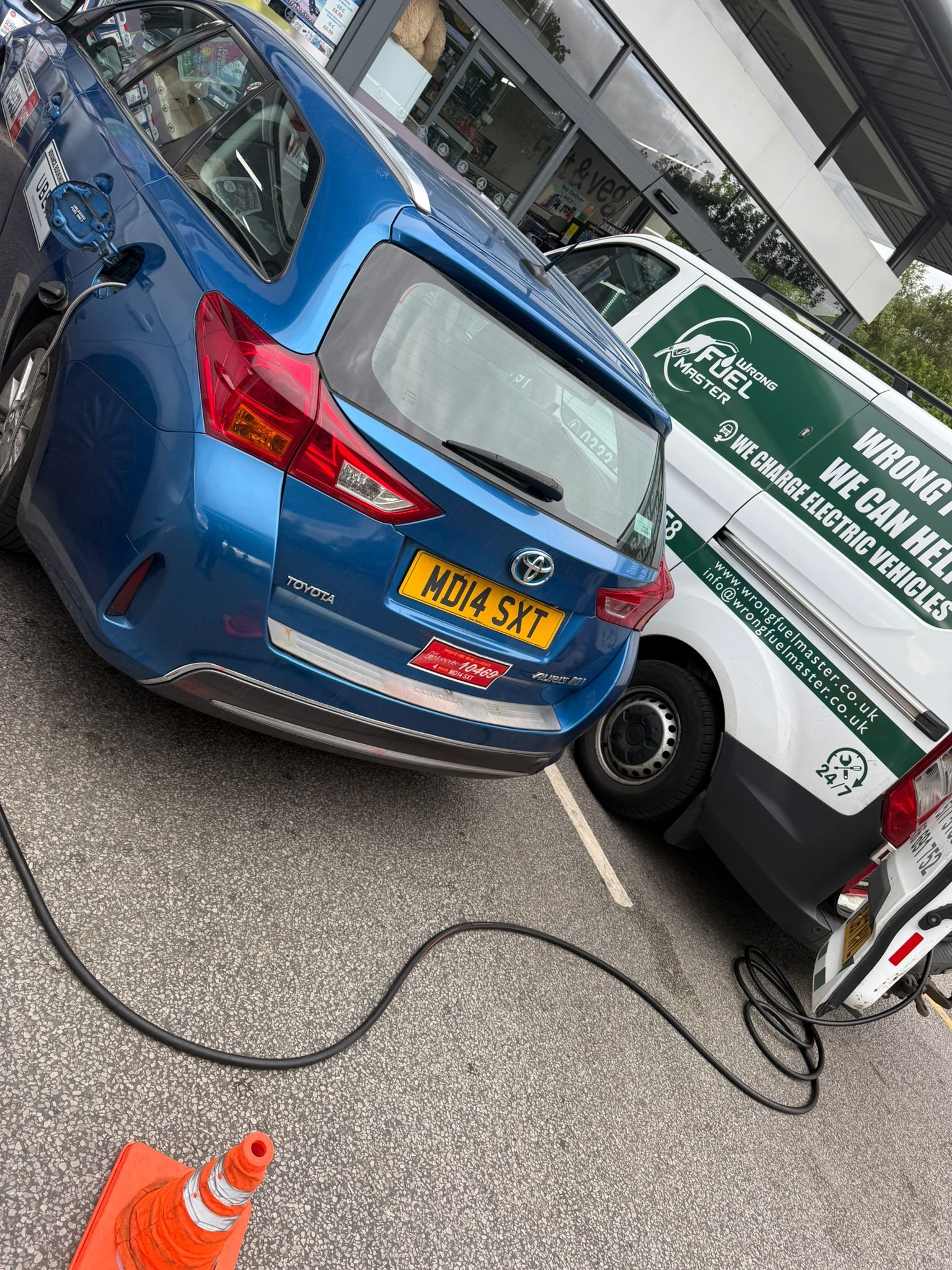
Adding AdBlue® (Diesel Exhaust Fluid / DEF) to a diesel filler neck is one of the most expensive mistakes a modern driver can make. Because AdBlue is 32.5% pharmaceutical-grade urea dissolved in de-ionised water, even a 0.5% by volume addition strips diesel’s lubricity, crystallises in high-pressure pumps, and corrodes aluminium lines. Wrong Fuel Master (2024) reports average UK repair bills of £ 2,750 and downtime of 36 hours per incident. This guide explains the chemistry, symptoms, immediate actions and long-term fixes using data from ISO 22241, Bosch wear studies and major OEM bulletins to help you avoid, limit or repair the damage.
1 | What Is AdBlue (DEF) and Why It Must Stay Separate
AdBlue (AUS 32) feeds the Selective Catalytic Reduction (SCR) system that converts harmful NOₓ gases into nitrogen and water vapour. It is neither a fuel nor an additive: it never touches internal engine components when systems are intact. Diesel is an oil-based hydrocarbon that lubricates injector plungers and pump cam-plates; DEF is water-based and mildly alkaline. ISO 22241 explicitly prohibits any DEF contact with fuel circuits because trace metals or lubricants ruin SCR catalysts, while urea crystals behave like abrasive sand inside precision fuel components. Mixing the two, therefore, risks dual-system failure: fuel delivery and emissions control.
2 | AdBlue vs Diesel Physical & Chemical Mismatches
- Viscosity: Diesel’s 2–4 cSt at 40 °C vs DEF’s approximate 1 cSt; lubrication instantly collapses.
- Boiling point: Diesel 180–360 °C; DEF water fraction boils at 100 °C, forming steam pockets.
- Freezing point: Diesel –10 °C (winter‐grade) vs DEF –11 °C; thawed DEF leaves sticky crystals.
- Corrosivity: DEF attacks copper, untreated steel and some aluminium alloys.
- Density: Diesel ≈ 0.82 kg/L¹; DEF ≈ 1.09 kg/L¹, causing rapid phase separation and water pooling at the fuel pick-up.
These contrasts make any mixture inherently unstable and destructive once pumps circulate fluid through rails and injectors.
3 | What Happens When DEF Enters a Diesel Tank
- Dilution & Phase Separation – DEF disperses then water sinks, creating corrosion pockets within minutes.
- Lubricity Loss – 1 % DEF raises HFRR wear scar from 350 µm to 700 µm (Bosch Test 22-DEF-19).
- Crystallisation – Urea precipitates, forming hard granules that score injector needles.
- Chemical Attack – Ammonia generated in hot injectors pits the pump plungers.
- Catalyst Poisoning – If the engine runs, phosphates and metals overload the SCR brick, voiding warranty (BMW SIB 13-04-21; Ford TSB 18-2190).
Even starting the engine for a few seconds can escalate a £350 roadside drain into a £ 4,000 full-system rebuild.
Read More: AdBlue in My Petrol Car
4 | Recognising Contamination: Ordered Symptom List
⚠ Ammonia odour at filler neck or exhaust—STOP immediately.
⚠ Milky fuel sample from tank drain point.
⚠ Dashboard alerts: “Fuel Rail Pressure Low” / “Injector Fault.”
✓ Rough idle after recent refuel.
✓ Blue-white exhaust smoke with acrid smell.
✓ Crystals around injector unions or pump seams.
Early ammonia smell precedes mechanical damage; catching it here can save thousands.
5 | Damage Thresholds & Testing Data
| DEF % in Diesel | Effect on Lubricity* | Typical Outcome | Repair Cost† |
|---|---|---|---|
| 0.1 % | +15 % wear | Tank flush recommended | £250–£400 |
| 0.5 % | +48 % wear | Pump wear measurable | £1 200–£1 800 |
| ≥1 % | +70 % wear | Injectors seize, SCR risk | £2 500–£5 000 |
*Bosch Test 22-DEF-19, 2024.
†Average UK workshop quotes, Wrong Fuel Master 2024.
6 | Immediate Do’s & Don’ts After Misfuelling
Do
- Stop filling and do not start the engine.
- Call a wrong fuel specialist.
- Keep all receipts, insurers classify this as accidental damage.
Don’t
- Attempt dilution with more diesel; water will still separate.
- Add alcohol-based “dryers”; they cannot dissolve urea.
- Drive “just to the garage” even idling distributes DEF to rails.
7 | Professional Drain & Flush – Scope and Cost
| Vehicle Class | Drain & Flush | +Injectors | +High-Pressure Pump | +SCR/DPF | Total Range |
|---|---|---|---|---|---|
| Passenger car | £350 | £600 | £700 | £800 | £1 750–£2 450 |
| Light van | £420 | £720 | £850 | £1 000 | £2 100–£3 000 |
| Heavy truck | £650 | £ 1,500 | £ 2,500 | £ 1,000 | £5 000–£6 500 |
Labour: tank removal, alkaline rinse, de-ionised water neutralisation, nitrogen blow-through, new filters and seals. Components are bench-flow-tested; failures trigger exchange units.
8 | Can You Drive After Contamination?
Manufacturers unanimously advise against it. A few anecdotal cases of ≤0.1 L DEF in a full 70 L tank showed no immediate symptoms, yet warranty investigations revealed accelerated cam-plate wear within 5,000 km. Starting the engine also coats the Diesel Oxidation Catalyst with urea, clogging the flow and triggering limp-home mode. BMW and Ford bulletins state that driving after DEF misfuelling constitutes misuse and voids fuel-system warranty—regardless of distance travelled.
9 | Preventing AdBlue Misfuelling
- Magnetic misfuel adaptors (ISO-Lock™) block diesel nozzles from DEF necks.
- Blue filler caps & “UREA ONLY” decals decrease night-time errors.
- Separate DEF fuel cards force a conscious double-check at truck stops.
- Nozzle-diameter sensors issue audible alerts if the wrong spout approaches the neck.
- Driver training: include a one-page misfuel response laminated in every cab.
- Storage discipline: keep DEF drums a minimum of 5 m from diesel barrels.
10 | FAQs
Does DEF float on diesel?
No. Water sinks below the fuel pick-up; urea dissolves, so separation does not protect components.
Will insurance pay for repairs?
Many comprehensive policies cover accidental misfuelling, but you may forfeit your no-claims bonus and pay an excess.
How long does a mobile drain take?
Typically 45–60 minutes; full workshop decontamination and injector testing require 24–48 hours.
Is any DEF amount “safe”?
OEMs set a zero-tolerance policy. ISO 22241 warns that even 0.2 % water can trigger diesel pump cavitation.
Where can I read the official DEF purity rules?
See ISO 22241-1:2023 Diesel Exhaust Fluid Specification (iso.org) and the EPA SCR Fundamentals page.
(Add FAQPage structured data to enable rich-result eligibility.)
Conclusion – Keep DEF & Diesel Apart
AdBlue enables Euro 6 and EPA Tier IV engines to meet strict NOₓ limits, but it is catastrophically incompatible with diesel fuel systems. A single trigger squeeze can corrode pumps, poison catalysts and void warranties. Follow the golden rules: never start the engine after misfuelling, call a certified fuel-drain specialist, and fit inexpensive misfuel-prevention hardware. Meticulous labelling, driver education and ISO-compliant DEF handling will safeguard both your engine and the environment.





No comment yet, add your voice below!